Modern Financial Clarity
Budgeting isn't about deprivation; it is about intentionality. Think of a budget as a strategic map for your capital. Most people view a budget as a rearview mirror—looking at what they already spent. A truly effective system is a windshield, looking forward to determine where every dollar should go before the month begins.
In professional financial planning, we often see that those who use a "zero-based" or "percentage-based" approach have a 20% higher savings rate than those who "save what is left over." For example, a client earning $5,000 monthly who didn't track expenses often "lost" $600 to $800 in small, unrecorded transactions like streaming subscriptions and convenience dining. By implementing a proactive system, that "lost" money was redirected into a high-yield savings account (HYSA) at Marcus by Goldman Sachs, yielding an additional $400 in annual interest alone.
Statistical data from the Federal Reserve indicates that nearly 37% of adults could not cover a $400 emergency expense with cash. Moving from a reactive state to a proactive system changes your financial DNA from "surviving" to "scaling."
Why Tracking Fails
The primary reason people abandon financial planning is "detail fatigue." Trying to categorize every $3 coffee leads to frustration. People often set unrealistic goals, such as cutting all "fun" spending overnight, which creates a rebound effect similar to a crash diet.
When you fail to account for "irregular expenses"—like annual car registration or holiday gifts—the budget breaks. This creates a psychological sense of failure. In reality, it wasn't a lack of discipline; it was a logic of structural forecasting. For instance, if your car insurance is $1,200 a year, and you aren't setting aside $100 every month, your "balanced" budget will collapse in the month the bill is due.
The consequence of this cycle is "lifestyle creep," where as your income increases, your expenses rise at the same rate, leaving your net worth stagnant. Without a system, you are essentially working for your bank and your creditors rather than for your future self.
Structural Solutions
The 50/30/20 Framework for Balanced Allocation
The most resilient system for beginners is the 50/30/20 rule. This allocates 50% of your take-home pay to Needs (rent, utilities, groceries), 30% to Wants (dining, hobbies), and 20% to Financial Goals (debt repayment, investing). This works because it provides guardrails while allowing for flexibility. If your needs exceed 50%, you know exactly where the pressure is coming from—usually housing or transport—allowing you to make informed lifestyle adjustments.
Automating the "Pay Yourself First" Principle
Digital tools have made manual tracking obsolete for many. Using an app like YNAB (You Need A Budget) or Rocket Money allows you to sync your bank feeds and see exactly where your money is going in real-time. The most effective tactic is to automate your 20% savings. Set up a recurring transfer to a brokerage account like Vanguard or Charles Schwab the day your paycheck hits. If you never see the money in your checking account, you won't spend it.
The Power of Sinking Funds for Hidden Costs
A sinking fund is a separate category for non-monthly expenses. If you plan to spend $1,200 on a vacation in 12 months, you save $100 a month starting now. This prevents "financial shocks." We recommend using a digital bank like Ally Bank, which allows you to create "buckets" within a single savings account. This way, you can visually see $500 for "Car Maintenance" and $300 for "Christmas," preventing you from dipping into your emergency fund for predictable events.
Utilizing High-Yield Environments for Liquid Cash
Keeping your emergency fund in a standard big-bank savings account is a mistake, as interest rates there are often as low as 0.01%. By moving that money to a High-Yield Savings Account (HYSA) like SoFi or Capital One 360 Performance Savings, you could be earning 4.00% to 4.50% APY. On a $10,000 emergency fund, that is the difference between earning $1 and $450 per year just for having the money sit in a different digital vault.
Debt Snowball vs. Debt Avalanche Strategies
If you have high-interest debt, your budget must prioritize its elimination. The Debt Snowball (paying smallest balances first) builds psychological momentum, while the Debt Avalanche (paying highest interest rates first) saves the most money. For a user with a $5,000 credit card balance at 24% APR and a $10,000 car loan at 5%, the Avalanche method is mathematically superior, saving thousands in interest over the life of the debt.
Strategic Groceries and Variable Cost Capping
Variable costs are where budgets go to die. To combat this, use the "Cash Envelope" method—either physically or digitally. Limit yourself to a specific amount for groceries and dining. Services like Instacart can actually save you money by preventing impulse buys at the store, despite the delivery fee. If you see your cart total is $150 before you hit "order," you are more likely to remove unnecessary items than if you are already at the physical checkout line.
Real-World Success
Case Study 1: The "Subscription Leak" Correction
Subject: A dual-income household earning $120,000 annually but living paycheck to paycheck.
Problem: They had no idea where their discretionary income was going.
Action: We ran a 90-day audit using Copilot Money. We discovered $240 monthly in "ghost" subscriptions (unused gym memberships, three different music streamers, and forgotten SaaS tools).
Result: By canceling these and redirecting that $240 into a Roth IRA, they projected an extra $185,000 in retirement savings over 30 years (assuming 7% growth).
Case Study 2: The Freelancer's Variance Fix
Subject: A freelance graphic designer with inconsistent monthly income ranging from $3,000 to $8,000.
Problem: Overspending during "fat" months and accruing debt during "lean" months.
Action: We implemented a "Hill and Valley" fund. We calculated her average monthly needs ($4,000). In months where she earned $8,000, the surplus went into a business savings account. In months she earned $3,000, she "paid herself" $1,000 from that account.
Result: She eliminated credit card dependency within 6 months and maintained a stable lifestyle regardless of her client load.
Tool Comparisons
| Feature | YNAB (You Need A Budget) | Empower (formerly Personal Capital) | The 50/30/20 Manual Spreadsheet |
| Best For | Active, zero-based budgeting | Net worth tracking & investments |
Total customization & privacy |
| Effort Level | High (Every dollar gets a job) | Low (Automatic tracking) | Medium (Manual entry) |
| Cost | Paid Subscription | Free | Free |
| Focus | Reducing spending | Growing wealth | Awareness |
| Learning Curve | Steep | Easy | Moderate |
Avoid Smart Blunders
One major mistake is "budgeting for a perfect version of yourself." If you currently spend $600 on dining out, don't set your budget to $100. You will fail by the second week. Instead, aim for $500, then $400. Gradual reduction is sustainable; radical shifts are not.
Another error is ignoring the "Small Wins" at the expense of the "Big Wins." While skipping a latte saves $5, negotiating your internet bill with Xfinity or switching to a low-cost carrier like Mint Mobile can save $50 to $100 every single month with zero effort after the initial change.
Finally, don't forget to include a "Blow Money" category. This is a set amount of cash you can spend on anything—guilt-free. Without this, the budget feels like a prison, and you are more likely to "jailbreak" and overspend significantly later.
FAQ
How much should I have in my emergency fund?
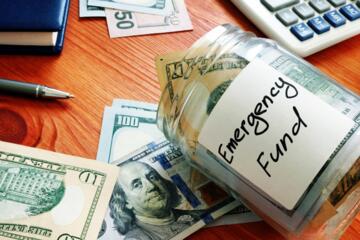
Aim for 3 to 6 months of essential expenses. If your "needs" cost $3,000 a month, your goal is $9,000 to $18,000. Start with a $1,000 "starter" fund before aggressively paying down low-interest debt.
Should I invest while I still have debt?
If the debt interest rate is higher than 7% (like credit cards), pay the debt first. If it is lower (like a 3% mortgage), investing in the stock market via an index fund like VTI usually yields better long-term results.
How often should I check my budget?
Perform a "Five-Minute Check-in" every three days to categorize transactions while they are fresh. Do a "Monthly Review" on the last Sunday of the month to set goals for the next 30 days.
Is it better to use cash or credit cards?
For beginners who struggle with overspending, cash is superior because of "coupling"—the physical pain of handing over bills. However, if you are disciplined, using a card like the Chase Freedom Unlimited offers 1.5% back, which is essentially a discount on your entire life.
What if I have an irregular income?
Budget based on your lowest expected monthly income. Anything earned above that is a "bonus" that goes directly toward your highest financial priority (debt or savings) rather than increasing your daily spending.
Author's Insight
In my decade of analyzing financial behaviors, I have found that the "best" budget is the one you actually stick to, not the one with the most complex formulas. I personally use a hybrid approach: I automate all my fixed bills and investments on the 1st of the month, and then I simply track my "Leftover" balance. This "Anti-Budget" works because it focuses on the outcome rather than the process. If your savings goals are met first, the rest of your spending matters significantly less.
Summary
Mastering your finances requires a shift from passive observation to active management. By implementing the 50/30/20 rule, leveraging high-yield accounts, and using automation tools like YNAB or Ally, you remove the emotional burden of money management. Start by identifying your "subscription leaks" today and moving your emergency fund to a high-yield environment. Small, structural changes are the foundation of long-term wealth; the best time to start was yesterday, but the second-best time is now.