Understanding the Math
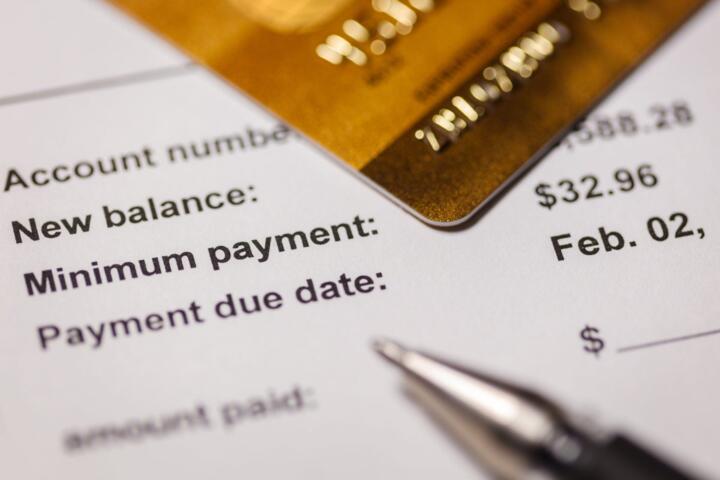
The "minimum payment" is not a recommended repayment schedule; it is the absolute floor required to keep your account in good standing while ensuring the maximum amount of interest accrues. Most major issuers, such as Chase or Citibank, calculate this as either a flat percentage (usually 1% to 3%) of the total balance plus interest, or a fixed dollar amount like $25 or $35, whichever is higher.
When you pay only the minimum, the vast majority of your capital goes toward the interest charges rather than the principal. This creates a "haircut" effect where your actual debt reduction is negligible. According to the Federal Reserve's G.19 report, the average credit card interest rate has climbed above 21%, meaning a stagnant balance can double in less than four years if not aggressively managed.
In practice, a $5,000 balance at 22% APR with a 2% minimum payment would take over 20 years to pay off. You wouldn't just pay back the $5,000; you would end up paying back over $13,000 in total. This is the "hidden cost"—the massive wealth transfer from the consumer to the financial institution through time-weighted compounding.
The Debt Cycle Trap
The Illusion of Cash Flow
Many cardholders view the minimum payment as a tool for liquidity. By paying only $60 on a $3,000 balance, they feel they have "saved" $2,940 for other expenses. This is a cognitive bias; you aren't saving money, you are renting it at an exorbitant rate. This illusion leads to lifestyle inflation, where users continue to spend because their monthly "obligations" appear low on paper.
The Credit Score Paradox
While paying the minimum keeps your payment history clean, it wreaks havoc on your credit utilization ratio. FICO scores heavily weight utilization—the amount of credit used versus your limit. Keeping balances high by paying the minimum keeps your utilization above the recommended 30% threshold, which can suppress your credit score by 50 to 100 points, making future loans for homes or cars far more expensive.
Negative Amortization Risk
In some scenarios involving promotional rates that expire, a consumer might find themselves in a state of quasi-negative amortization. If the interest accrued in a month exceeds the minimum payment required, the balance actually grows despite the payment being made. This is common in "deferred interest" plans offered by retail stores for furniture or electronics.
The Psychological Anchor
Research in behavioral economics shows that the presence of a "minimum payment" amount on a billing statement acts as an anchor. Consumers often subconsciously see this number as a "suggestion," leading them to pay significantly less than they otherwise would if the statement only showed the total balance due. This nudging strategy is a primary driver of long-term credit card debt.
Compounding Interest Penalties
If you miss even a single payment or fall below the minimum, many issuers trigger "penalty APRs" which can skyrocket to 29.99%. At this rate, the math becomes nearly impossible to overcome without external intervention. The cost of the debt accelerates so fast that the minimum payment barely covers the daily interest accrual, leaving the principal untouched for years.
Recovery Strategies
The Velocity Banking Method
Instead of following the issuer's suggested schedule, use a "constant payment" strategy. If your minimum is $100 but you can afford $400, keep paying $400 even as the required minimum drops over time. This creates an exponential reduction in the principal. Tools like Tally or Gauss can help automate this by moving high-interest balances to lower-rate lines of credit, ensuring more of your dollar hits the principal.
Strategic Refinancing
If your credit score is still above 680, look at personal loan providers like SoFi or Marcus by Goldman Sachs. A personal loan typically offers a fixed interest rate between 8% and 14%, which is significantly lower than the 22%+ on credit cards. By "consolidating," you turn revolving debt into an installment loan with a fixed end date, effectively killing the minimum payment trap in one move.
The 15/15 Payment Hack
Make a payment of half your monthly amount 15 days before the due date, and the other half 3 days before. Since credit card interest is calculated based on your Average Daily Balance (ADB), reducing that balance earlier in the billing cycle reduces the total interest charged for that month. This simple timing shift can save hundreds of dollars over the life of the debt without increasing your total monthly spend.
Leveraging 0% APR Windows
Transferring balances to cards like the Wells Fargo Reflect or BankAmericard, which offer 0% intro APR for 18-21 months, is a powerful move. However, you must divide the total balance by the number of months in the promo period and pay that exact amount. If you only pay the minimum on a 0% card, you are wasting the interest-free window and will be hit with a "interest shock" once the period ends.
Negotiating Lower Rates
Call your issuer's retention department and request a "hardship program" or a simple APR reduction. Mention competing offers from other banks. A 5% reduction in your APR can shave years off your repayment timeline if you maintain the same payment volume. Many users are surprised to find that banks will often lower rates for long-term customers who simply ask.
Real World Scenarios
Consider the case of a mid-sized marketing firm that utilized corporate credit cards for "soft" expenses like SaaS subscriptions and travel. Over 12 months, the firm accumulated $45,000 in debt across three cards with an average APR of 19%. By paying only the minimums of roughly $900, they were spending nearly $700 monthly just on interest. After auditing their cash flow, they shifted to a "Debt Avalanche" strategy, targeting the highest interest card with an additional $2,000 monthly. Within 14 months, the debt was cleared, saving the company over $12,000 in projected interest payments.
Another example involves an individual with $12,000 in debt at 24% APR. Their minimum payment was $240. By switching to a debt consolidation loan at 11% APR with a fixed 3-year term, their payment rose slightly to $390, but the total interest paid dropped from a potential $15,000 (if paying minimums) to just $2,100. This move effectively increased their net worth by $13,000 over three years simply by restructuring the debt vehicle.
Repayment Comparison
| Strategy Name | Interest Savings | Psychological Impact | Ideal For |
|---|---|---|---|
| Minimum Payment Only | 0% (Worst) | High Stress | Emergency liquidity only |
| Debt Snowball | Moderate | High Motivation | Users with multiple small debts |
| Debt Avalanche | Maximum | Low (Slow start) | Users focused on math/efficiency |
| 0% APR Transfer | Extreme | High Pressure | High-credit scores with discipline |
| Consolidation Loan | High | High (Fixed end date) | High balances/revolving cycles |
Common Debt Pitfalls
The most frequent error is treating a credit limit as an extension of income. When users see a $10,000 limit, they often mentally categorize it as "available funds." To avoid this, use apps like Rocket Money or YNAB (You Need A Budget) to mirror your credit spending against your actual bank balance in real-time. This forces you to see the "cost" of the purchase immediately rather than waiting for the statement.
Another mistake is closing a card immediately after paying it off. While it feels cathartic, it reduces your total available credit and shortens your credit history length, both of which can drop your credit score. Instead, keep the card open, put a small recurring subscription (like Netflix) on it, and set it to "Auto-Pay Full Balance" to maintain the positive credit signal without accruing interest.
Frequently Asked Questions
Does paying the minimum protect my credit?
Yes, it protects your "Payment History" score (35% of your FICO), but it can damage your "Amounts Owed" score (30% of your FICO). While you won't get late fees, your score may stay stagnant or drop due to high utilization.
Can I ask for a lower minimum payment?
Technically yes, but this is a dangerous move. Most banks only offer this during extreme financial hardship. It will result in even more interest accruing over time and usually involves a temporary freeze on your ability to use the card.
Is it better to pay $50 over the minimum?
Absolutely. Even a small amount above the minimum goes 100% toward the principal balance. Adding just $50 to a standard minimum payment can often cut the total repayment time by several years.
What happens if I can't even afford the minimum?
Contact the issuer immediately—before you miss the due date. Ask for their "Internal Recovery" or "Hardship" department. They can often lower your rate to 0-9% for a short period to help you catch up, though they may close the account.
Do minimum payments include annual fees?
Usually, yes. When an annual fee is charged, it is added to the balance, and the minimum payment for that month is adjusted upward to ensure the fee and the interest are covered.
Author’s Insight
In my years of analyzing consumer credit trends, I have found that the "minimum payment" is the most effective marketing tool banks have ever invented. It transforms a high-interest loan into a manageable monthly "subscription fee" that many people never cancel. My practical advice is simple: ignore the "Minimum Payment Due" line entirely. Instead, look at the "Interest Charged" line on your last three statements. If that number makes you feel uncomfortable, you are moving in the right direction. True financial freedom starts the moment you stop paying for your past and start investing in your future.
Summary
The hidden cost of minimum payments is the loss of your future purchasing power. While the low monthly requirement offers a temporary sense of financial breathing room, it serves as a mechanism for permanent debt. To break the cycle, you must treat credit card debt as a financial emergency. Audit your statements, utilize consolidation tools like personal loans or 0% transfers, and always pay more than the requested minimum. By shifting your focus from "monthly affordability" to "total cost of capital," you can dismantle the compounding trap and accelerate your path to wealth.